
A businessman in Ratlam was allegedly defrauded of Rs 55 lakh by cyber criminals posing as police officers. The fraudsters claimed his mobile number was linked to Pakistan's ISI and threatened legal action, coercing him to transfer funds. Three accused have been apprehended, and Rs 20 lakh of the defrauded amount has been blocked.

A Pakistan-backed ISI-underworld terror module, busted by Delhi Police, had planned to attack policemen and security forces in Mumbai to avenge the demolition of an illegal mosque in Garib Nagar, Bandra.

The arrests were made following a sustained investigation and intelligence-based operation. Officials said the module was under surveillance for some time before coordinated action was taken to apprehend its members.

Delhi Police have busted a Pakistan-backed ISI-underworld terror module, arresting eight suspected operatives planning attacks in Delhi, Mumbai, Punjab and Chandigarh.

Records stretching back to 1947 suggest a consistent strategy by Pakistan's military and intelligence apparatus, the Inter Services Intelligence (ISI), of using terrorism as a state policy against India.
The 64-year-old Pakistani-origin Canadian businessman would also be questioned on his suspected links with the officials of Pakistan spy agency Inter-Services Intelligence (ISI) and his association with terror group Lashkar-e-Taiba (LeT), which had orchestrated the attacks.

'The Pakistan establishment keeps him well protected.'
The serial blasts in Mumbai on Wednesday night were the handiwork of the Inter Services Intelligence which is trying to spread terror in India, believes Girish Chander Saxena, former governor of Jammu and Kashmir and former chief of the Intelligence Bureau. "I have little doubt that the incidents in Mumbai and the one Pulwama in Kashmir, in which three top terrorists including two persons of Pakistan origin and a local militants were killed by security forces, could be linked

'He decides who will be Pakistan's prime minister, president, even provincial chief ministers.'
On a day when Prime Minister Manmohan Singh said the Mumbai attacks could not have been carried out without the support of official agencies in Pakistan, Intelligence Bureau sources told rediff.com that the Inter-Services Intelligence agency had detailed knowledge about the planning and execution of the November 26 attacks in Mumbai. No terror operation in India is a success unless it is backed by the ISI, the sources added.
While the Pakistan Foreign Office was yet to react, Minister of State for Information Tariq Azam rejected the claim and said India could provide any evidence it has and that Pakistan will investigate it.
'This is something the ISI would have wanted to prevent. There was no direct ISI involvement whatsoever,' claims American national security expert Harlan Ullman, who has close links with the Pakistani government and military.
Some of the money used to finance the terror attacks in Mumbai last November and the Indian Institute of Science in Bengaluru in December 2005 came via a fake currency racket, sources from the Intelligence Bureau and Central Bureau of Investigation have revealed.

'6 shooters went to kill Dawood in Pakistan.'
Agitated over confusing signals emanating from Pakistan with regard to Mumbai attacks, India on Friday slammed it for not responding through proper channel and felt that Islamabad was doing it deliberately to hide the truth about involvement of state actors in the carnage.
Pakistan-based terrorist outfit Lashkar-e-Tayiba had the backing of the Islamic nation's spy agency Inter Services Intelligence, which shared intelligence with Lashkar and provided protection to it in the Mumbai terror attacks, a media report said on Monday.American intelligence and counterterrorism officials were quoted by the New York Times as saying that LeT has quietly gained strength in recent years with the assistance of Pakistan's ISI.
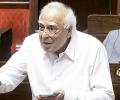
Rajya Sabha MP Kapil Sibal has congratulated both the previous UPA government and the current dispensation for the extradition of Tahawwur Hussain Rana, the mastermind behind the 2008 Mumbai attacks. Sibal expressed confidence that the extradition will shed light on the involvement of individuals within Pakistan's establishment in the attacks. Rana is being questioned by the National Investigation Agency (NIA) to uncover the full extent of the conspiracy behind the deadly 2008 terror strikes. Sibal highlighted the efforts of the UPA government in establishing the NIA and pursuing Rana's extradition, and also acknowledged the current government's success in bringing him back to India. The interrogation is expected to focus on Rana's potential ties to the Lashkar-e-Taiba (LeT) and his role in the Mumbai attacks.
Mulford said the US and India were together in fight against terrorism and that Washington had offered its services in investigations into the Mumbai bombings, particularly in forensic examinations.
Pro Publica has published a report which underlines the ISI's links to the 26/11 terror attacks. Rediff.com's Vicky Nanjappa eaxamines this latest revelation in the twisted and long drawn out investigation.
Pakistani President Asif Ali Zardari met Prime Minister Yousuf Raza Gilani and army chief Gen Ashfaq Parvez Kayani on Saturday night to discuss the fallout of the coordinated terrorist strikes in Mumbai amid India's accusations about possible Pakistani links to the attacks. This was the second meeting on Satruday of the three top leaders

The US government has informed a New York court that Pakistan's intelligence agency Inter Services Intelligence and its former director generals "enjoy immunity" in the case related to 26/11 filed by the relatives of victims of the Mumbai terror attack and asked Pakistan to dismantle LeT and support India's efforts to counter terrorist threat.
Pakistan and its spy agency Inter-Services Intelligence had played a vital role in imparting training to convicts to handle weapons and explosives, which materialised in the 1993 Mumbai serial blasts, the Supreme Court held.
The conspiracy was hatched in Mumbai and adjoining areas after taking training in Bahawalpur in Pakistan.
'acts of terrorism are controlled and monitored by ISI' -- Baloch leaders.

Pakistani-origin Canadian businessman Tahawwur Rana, a key accused in the 26/11 terror attacks case, stayed at a hotel in Mumbai's Powai area for two days in November 2008 ahead of the attacks, where he discussed about the crowded places in south Mumbai with a witness in the case, the police said on Tuesday.
Refuting reports about the arrest of a suspected Inter-Services Intelligence agent in Mumbai, the city police on Wednesday said Javed Abdul Gafoor Mozawala, is an Indian national who has been held for allegedly indulging in anti-national activities.
The ISI demanded that the mafia transport weapons and explosives into India in return for the use of Pakistani waters, sources said.
The 26-page lawsuit accusing the ISI of aiding and abetting the LeT in the slaughter of 166 people was filed before a New York Court on November 19, following which the Brooklyn court issued summons to Major Samir Ali, Azam Cheema, Ahmed Shuja Pasha, Nadeem Taj and Major Iqbal of the Inter-Services Intelligence of the Islamic Republic of Pakistan, Zakiur Rehman Lakhvi of the Lashkar-e-Tayiba and and Hafiz Saeed of the Jammat ud Dawaa.
India has proof that the Inter Services Intelligence was involved in planning the Mumbai terror attacks and training the terrorists who killed 183 people during a 60-hour siege of the country's financial capital, sources said in New Delhi on Thursday. The names of trainers and the places where meticulous training took place are also known to the government, the sources said
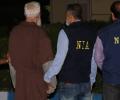
Tahawwur Hussain Rana, a Canadian national accused of involvement in the 2008 Mumbai terror attacks, has been extradited to India from the United States. Rana's interrogation is expected to shed light on the role of Pakistani state actors in the attacks, which claimed 166 lives. Indian authorities are particularly interested in his travels across India in the days leading up to the attacks, including visits to Hapur, Agra, Delhi, Kochi, Ahmedabad, and Mumbai. Rana's extradition follows a lengthy legal battle, with the US Supreme Court ultimately denying his application to challenge it. Rana is known to be associated with Pakistani-American terrorist David Coleman Headley, one of the main conspirators of the 26/11 attacks. The investigation into the Mumbai attacks has implicated senior members of terror outfits Lashkar-e-Taiba (LeT) and Harkat-ul Jihadi Islami (HuJI), as well as officials from Pakistan's Inter-Services Intelligence (ISI).
The National Investigation Agency (NIA) has begun questioning Tahawwur Hussain Rana, the mastermind behind the 2008 Mumbai terror attacks, to uncover the larger conspiracy behind the deadly strikes. Rana, who was extradited from the US, is being held at the NIA headquarters in New Delhi. The interrogation is focused on his possible connection with the Lashkar-e-Taiba (LeT) and his suspected links with the Pakistani spy agency Inter-Services Intelligence (ISI).
In the first conviction under the Official Secrets Act in Maharashtra, a sessions court on Tuesday sentenced a city resident to five years' rigorous imprisonment on charges of possessing sensitive documents purportedly to hand over to Pakistan's intelligence agency Inter-Services Intelligence.
The ISI's Indian mole Honey Bee helped plan the November 26, 2008, Mumbai terror attacks and there were 10 locals who provided logistical support to David Headley, Adrian Levy tells Sheela Bhatt in an exclusive interview.
Pakistan military on Wednesday dismissed as 'fabricated' reports that Pakistani-American David Headley, who confessed to plotting Mumbai attacks, had named three army and Inter Services Intelligence officials for their involvement in the 26/11 strikes, claiming that it was an attempt to malign security agencies.
After the November 26 attacks on Mumbai brought the Lashkar-e-Taiyba's India-based modules under the Indian intelligence and law enforcement agencies's special scrutiny, the Lashkar has changed its game plan.
The District court conducting the Mumbai attack trial in the United States on Wednesday ordered that some of the over dozen sealed documents presented in the court as key evidences be made public.
'While Kasab was helpful in the investigation of the 26/11 terrorist attack, he was of no use in detecting and neutralising Lashkar's sleeper cells and the Indian Mujahideen.'

A statement issued by the Inter-Services Public Relations (ISPR) termed the report as false and fabricated, and said that they were aimed at maligning the image of the Pakistan Army and the ISI.
In revelations that clearly show Inter Services Intelligence's role in the Mumbai terror attacks, Pakistani-American terrorist David Headley has told his interrogators that the Pakistani intelligence agency had paid Rs 25 lakh to Lashkar-e-Tayiba to purchase a boat, which terrorists used to travel from Karachi.
